
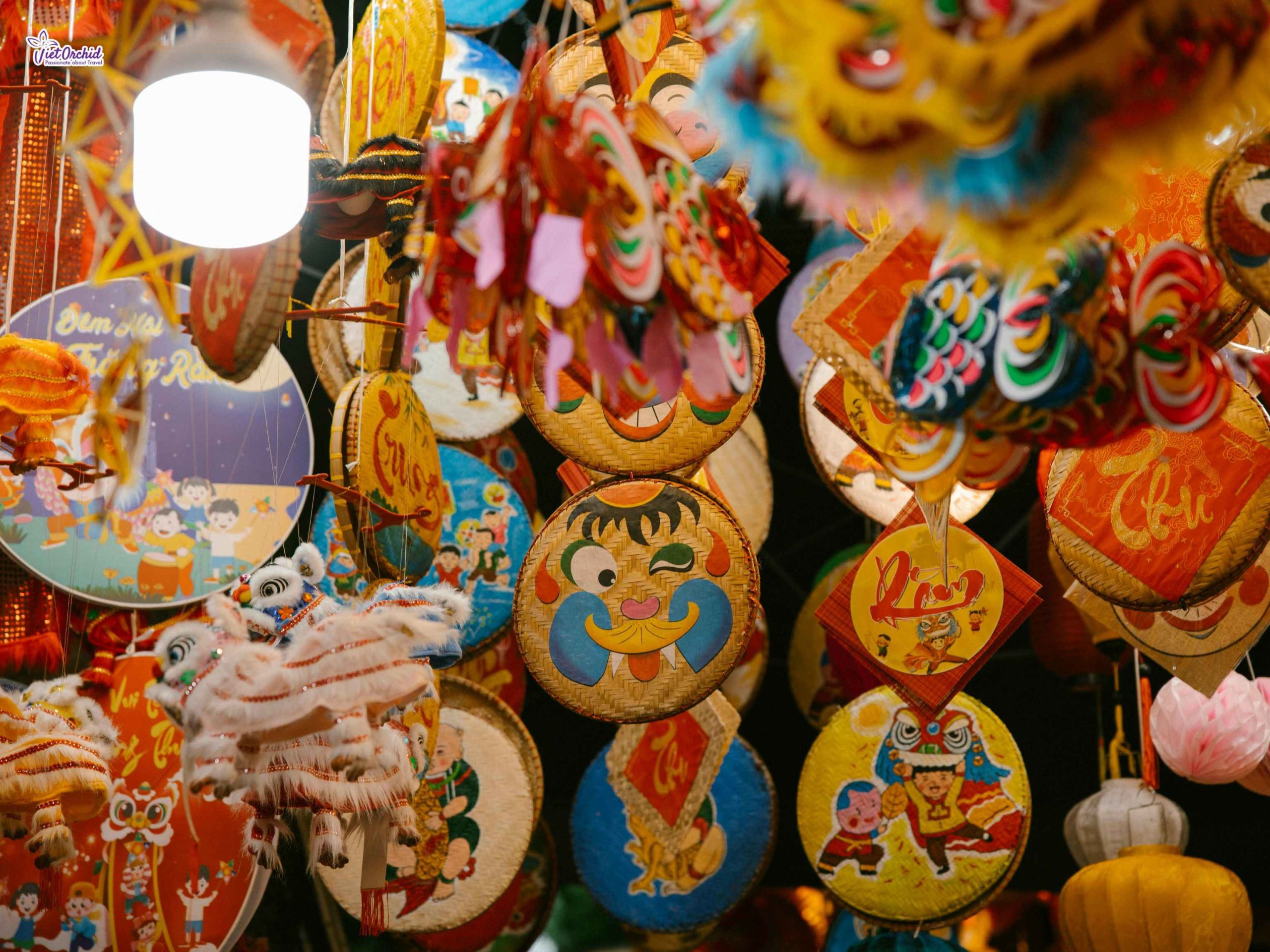
Colorful lanterns, lively lion dances, mooncakes and children celebrating under the full moon — these are some of the most familiar sights of the Mid-Autumn Festival in Vietnam, known locally as Tết Trung Thu.
If you are traveling to Vietnam during this special time, discover the story behind this centuries-old festival, how Vietnamese people celebrate it, and what you can experience during the Mid-Autumn Festival in Vietnam in 2026.
1. The Origins of the Mid-Autumn Festival in Vietnam
The Mid-Autumn Festival has been part of Vietnamese cultural life for centuries, although its exact beginnings are difficult to determine.
Historical references suggest that Mid-Autumn celebrations were already well established during the Lý Dynasty (1009–1225). An inscription at Đọi Pagoda dating from 1121 records celebrations in the imperial capital of Thăng Long, with activities such as lantern processions, water puppetry and boat races.
Like many traditional festivals across East Asia, the Mid-Autumn Festival is closely connected with the lunar calendar, the autumn harvest and the full moon. For Vietnam’s traditionally agricultural communities, it marked a welcome time after the farming season when people could celebrate a successful harvest and spend time with their families.
Over the centuries, the festival also became associated with familiar folklore and characters. One of Vietnam’s best-known folk tales is the story of Chú Cuội. According to legend, Cuội discovered a magical banyan tree whose leaves could bring the dead back to life. One day, the tree began rising into the sky, and as Cuội grabbed onto its roots to stop it, he was carried all the way to the moon. Legend says he has remained there beneath the banyan tree ever since, and Vietnamese children were traditionally told they could see his silhouette on bright full-moon nights.
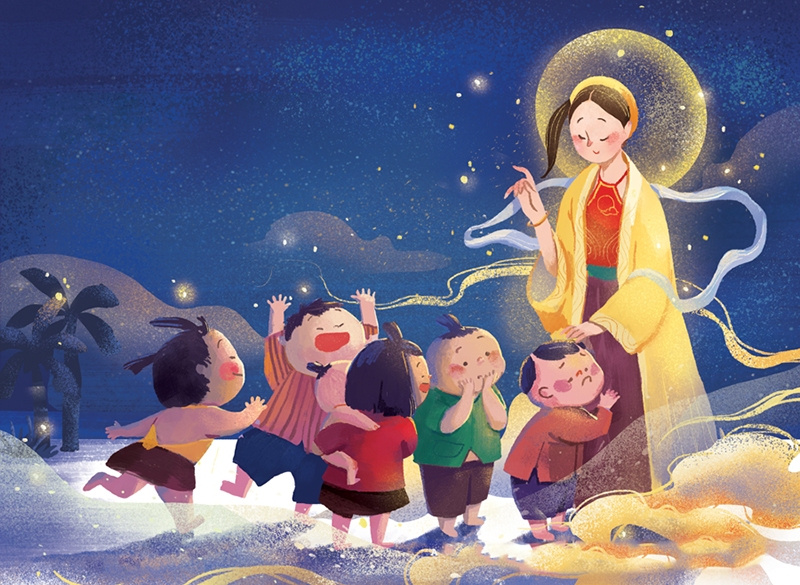
Another familiar figure is Chị Hằng (“Sister Hằng”), the legendary female figure associated with the moon. Together, Chị Hằng and Chú Cuội have become two recognizable characters of Tết Trung Thu in Vietnam, appearing in children’s stories, performances and community celebrations during the festival.
2. The Meaning of Tết Trung Thu and How Vietnamese People Celebrate
Tết Trung Thu takes place on the 15th day of the eighth lunar month, when the moon is full.
Traditionally, the full moon represents completeness and reunion. For Vietnamese families, Trung Thu has therefore long been associated with gathering together, sharing food and enjoying the moon after the harvest season.
Today, the festival is especially associated with children and is often described as Vietnam’s Children’s Festival. Children are at the heart of the celebration, and many of the traditions travelers see today are connected with childhood.
Lanterns and Lantern Processions
Perhaps the most recognizable symbol of the Vietnamese Mid-Autumn Festival is the lantern.
Children carry colorful lanterns through their neighborhoods after dark in a tradition known as rước đèn (lantern procession). Among the most iconic is the đèn ông sao (star-shaped lantern), traditionally made from bamboo frames and colorful transparent paper.
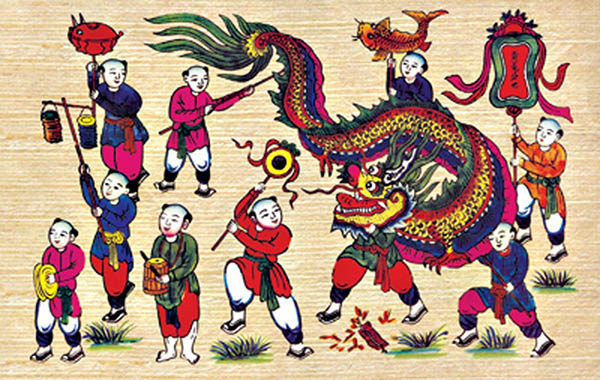
On festival night, groups of children carrying glowing lanterns through streets and alleys create one of the most charming scenes of Trung Thu in Vietnam.
Lion Dances
The sound of drums is another unmistakable sign that Trung Thu has arrived.
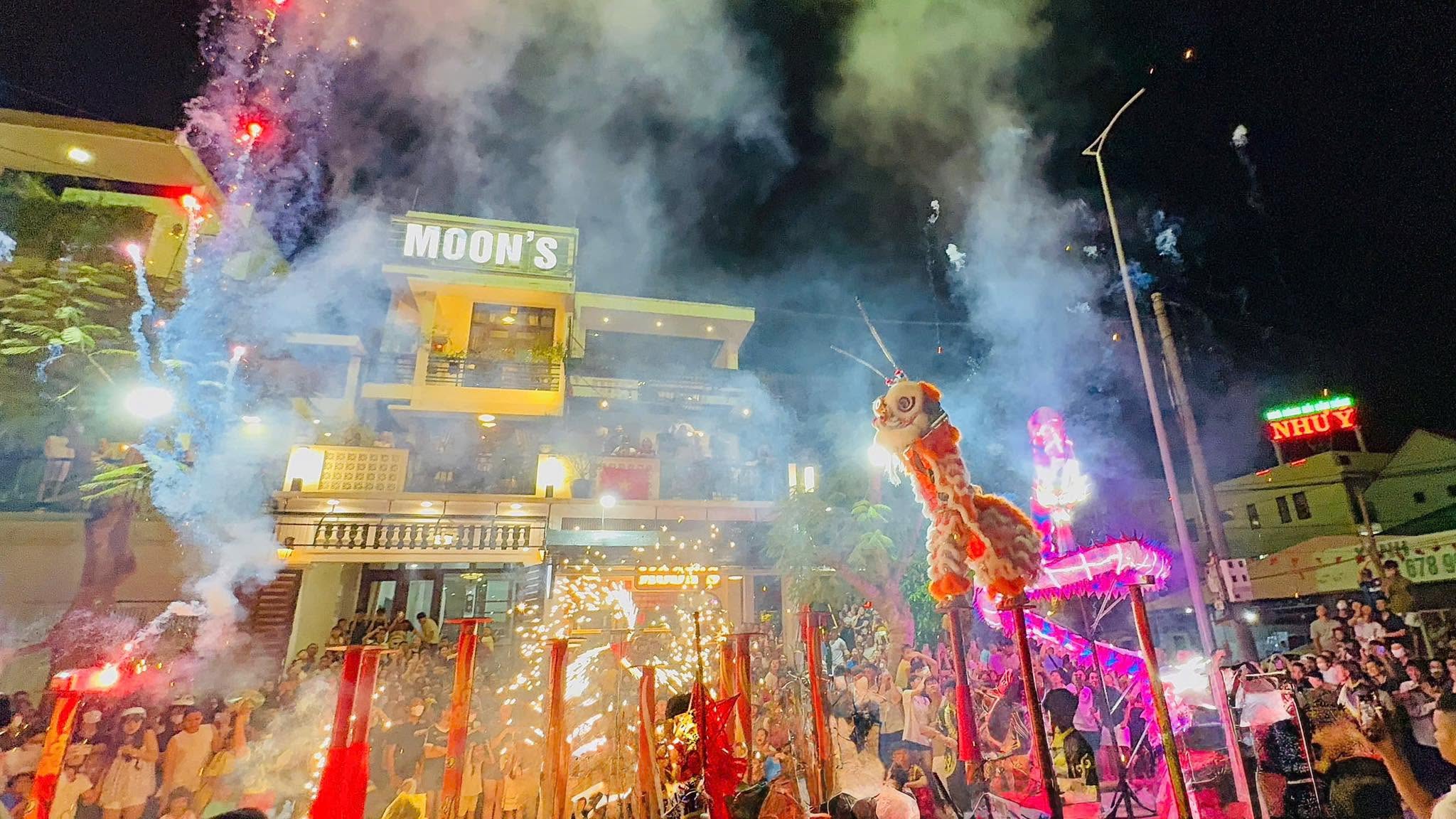
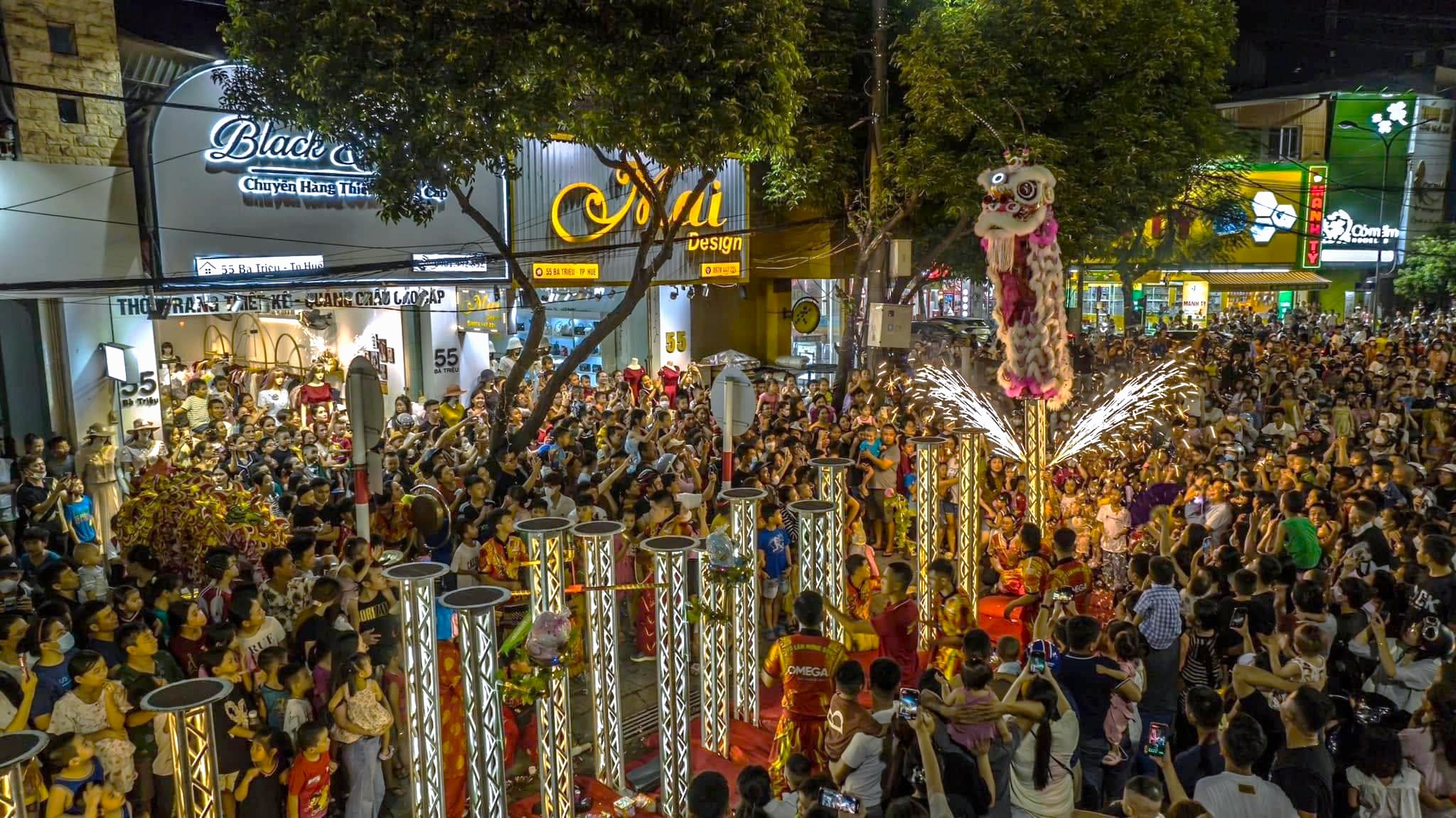
Known as múa lân (lion dance), these energetic performances take place in neighborhoods, schools, shops and public spaces, accompanied by drums and cymbals.
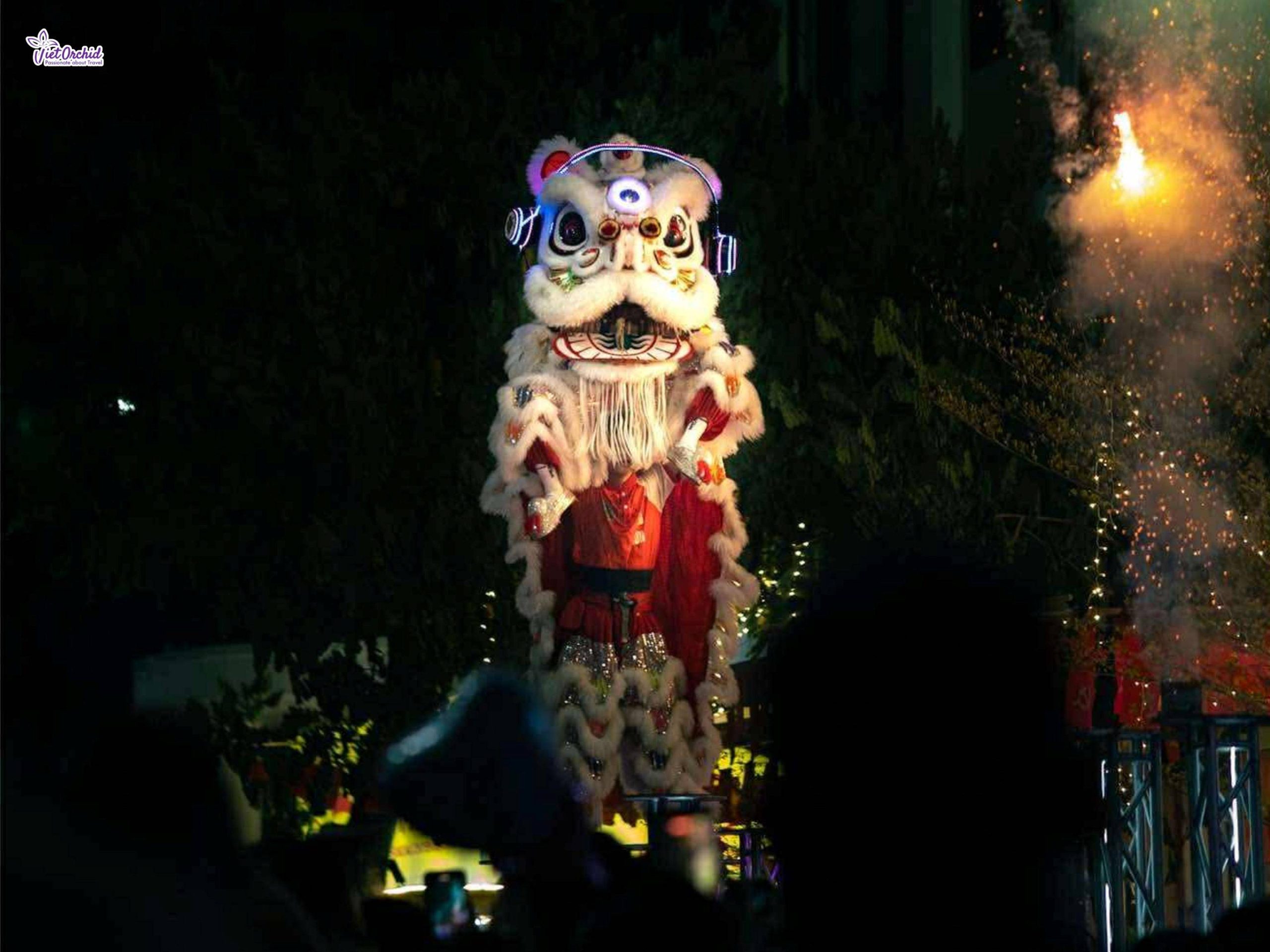
In the days leading up to the full moon, lion-dance teams can often be seen and heard moving through local neighborhoods, visiting homes and businesses. Welcoming a lion dance is traditionally associated with bringing good luck, prosperity and positive energy to the household.
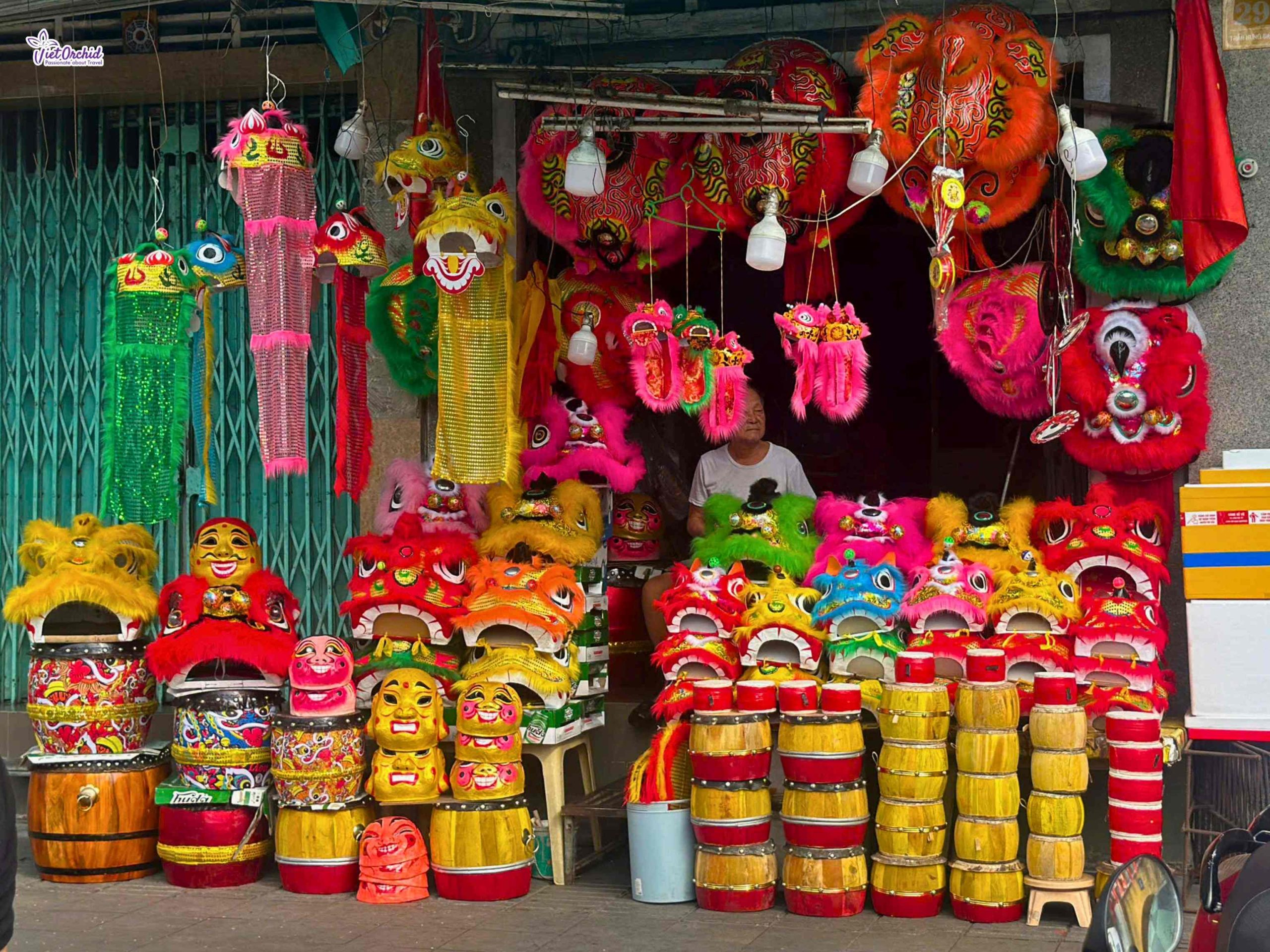
Alongside the lion, you may also see Ông Địa (the Earth God), a playful character recognized by his large smiling mask, round belly and fan. He dances alongside the lion, interacts with the crowd and brings a humorous element to the performance — making him especially popular with children.
Mooncakes and Family Gatherings
Food is another essential part of Mid-Autumn Festival.
Vietnamese mooncakes, or bánh Trung Thu (Mid-Autumn mooncakes), traditionally come in two main varieties: bánh nướng (baked mooncakes), with a golden-brown crust, and bánh dẻo (soft sticky-rice mooncakes), made with glutinous rice flour. Fillings range from lotus seed and mung bean to mixed nuts and salted egg yolk, alongside many modern flavors.
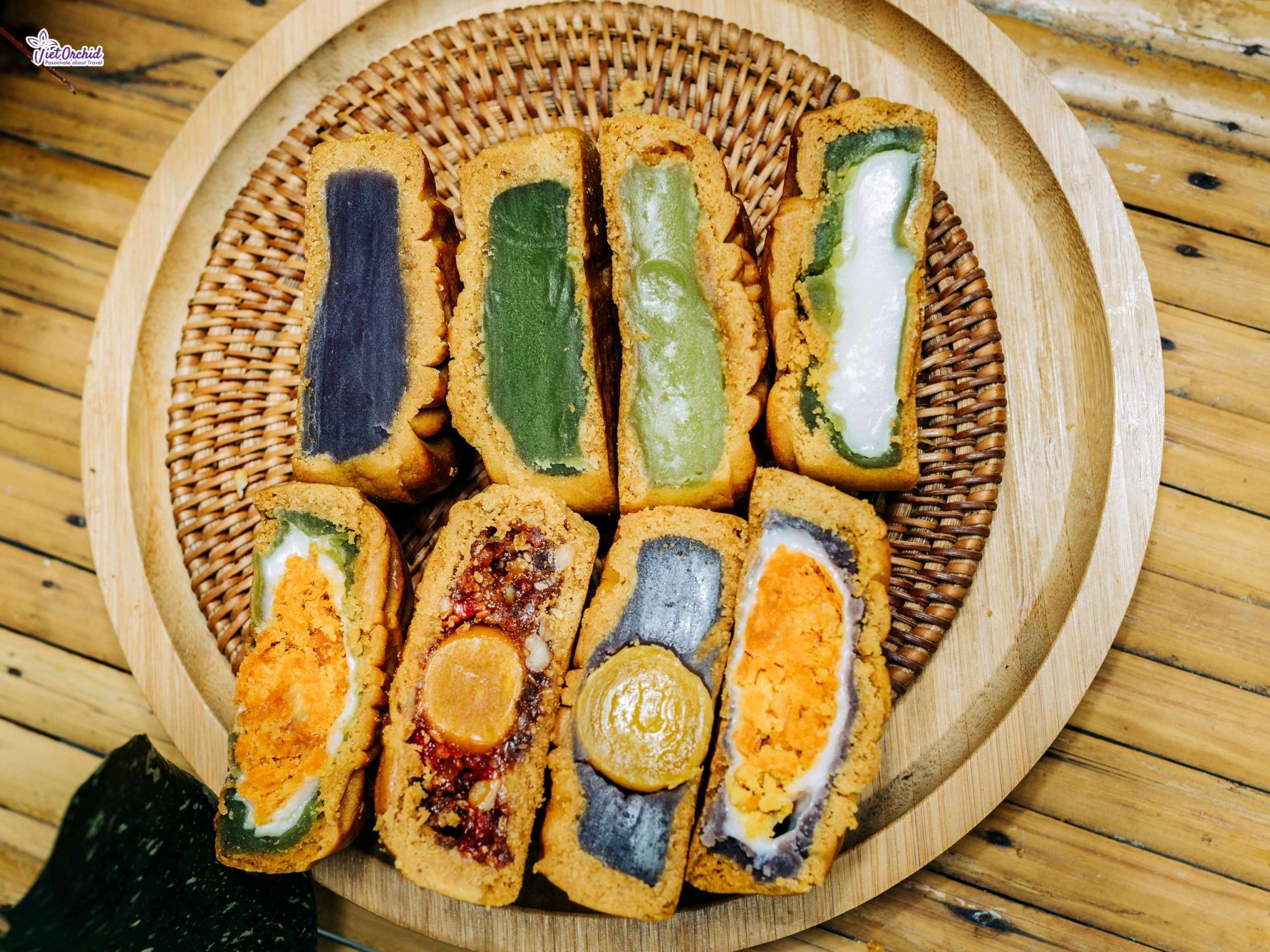
Families often enjoy mooncakes in small slices with tea, while beautifully packaged boxes are also exchanged as gifts among relatives, friends and colleagues.
In many homes, fruit and mooncakes may also be presented as offerings on the family ancestral altar before being shared together. These traditions make Trung Thu not only a joyful celebration for children, but also an occasion for family reunion and togetherness.
3. Mid-Autumn Festival in Vietnam 2026: What Travelers Can Expect
In 2026, the Mid-Autumn Festival falls on Friday, September 25, corresponding to the 15th day of the eighth lunar month.
However, travelers do not need to wait until September 25 to experience the festival. The atmosphere begins building in the weeks beforehand, as mooncake stalls appear, shops display colorful lanterns and traditional toys, Mid-Autumn decorations brighten public spaces, and lion-dance teams begin practicing in local neighborhoods.
Across Vietnam, from major cities to smaller towns, the festive atmosphere becomes increasingly noticeable as Trung Thu approaches. By the main festival night, streets and neighborhoods become livelier as families head out together and the sounds of drums, cymbals and children’s celebrations fill the evening.
For travelers, one of the most enjoyable things about Mid-Autumn Festival in Vietnam is that you do not necessarily need to attend a large organized event. Simply walking through a local neighborhood in the evening may lead you to a lion dance, children carrying star-shaped lanterns or families celebrating together — offering a natural glimpse into Vietnamese local life and tradition.
Experience Vietnam During the Mid-Autumn Festival
The Mid-Autumn Festival in Vietnam is more than a night of lanterns, lion dances and mooncakes. It is a celebration shaped by centuries of tradition, childhood memories and family togetherness.
If you are traveling in Vietnam during Mid-Autumn Festival, take some time to step into the local atmosphere — follow the sound of lion-dance drums, try a mooncake with Vietnamese tea, or simply watch children carrying their glowing lanterns through the streets.
These simple moments can offer a meaningful glimpse into Vietnamese culture and become a memorable part of your journey through Vietnam.
Planning a trip to Vietnam? Viet Orchid Travel creates private, tailor-made journeys designed around your travel dates, interests and preferred travel style. Let us help you discover Vietnam through its culture, local experiences and memorable destinations.
Viet Orchid Travel